
See where We Are Puget Sound has been featured!
Pages to a Passageway at the Kitsap History Museum
Based on a book intended to amplify voices around the Salish Sea, a tour of exhibits stops in Downtown Bremerton.
Story by Cougar Chronicle Reporter Amy Ngo [May 27, 2026]
On the 4th St. of Bremerton, the top floor of the Kitsap History Museum holds a portrayal of animal and human life around the Puget Sound and Salish Sea. Open through June, a detailed hallway of photographs and a section symbolizing better action toward the environment is an exhibit brought from the book, “We Are Puget Sound.” Each photo is unique in composition and subject, displaying the biodiversity of the Sea.
Featuring an amalgamation of passionate photographers, the display is designed to spark action in restoring the Puget Sound’s health. Photographer Brian Walsh, former environmental policy and planning specialist for Washington state government, began early in the demand for involvement in sustainability.
“When I was in high school…in Pennsylvania, I would go with my friend, and we'd go to the state library there,” Walsh said. “I had discovered a book by a fellow named Ansel Adams. He was a photographer of the American West and it inspired me to pursue photography, which I was already doing, as a way to educate people about the environment. It influenced me in terms of the path that I was going to take.”
As conservationists and environmentalists continue to care for the nature around them, involving the communities and their own strengths, can create a bigger impact. Washington Conservation Action’s Interim Puget Sound Program Director Rein Attemann worked with multiple photographers and writers to share information of what is being done to protect the sea and wildlife portrays all the efforts being adhered. Photographs of landscapes and portraits tell the tale of the Sound’s vitality, and are paired with descriptions sharing the backstory of each subject.
“It started off with a few folks who have worked strongly and heavily on Puget Sound recovery and protection,” Attemann said. “They had a meeting of their minds where they realized that with all the problems, the issues, the challenges facing a healthy Salish Sea and Puget Sound, there was a need to tell the story of what's at stake, what the issues are, who's all involved, and elevate the great work that people are doing in their communities in their own way that shows a strength in numbers addressing the community issues that they're challenged with.”
From pages in a book to an exhibit, it’s curated to establish the beauty and community the Salish Sea holds. Featured throughout the book, a multitude of photographers and writers have collaborated to share the means to which the sea is at stake and what restoration can be done.
“Washington Conservation Action partnered with Braided River, another nonprofit that specializes in multimedia impact campaigns that wants to see books being developed and generated for educational purposes, engagement purposes, and advancing efforts to protect and restore natural places,” Attemann said. “In this case, it's the Salish Sea and Puget Sound. And with that, we hold together a multimedia exhibit that illustrates and showcases all the wonderful imagery of the photographers in the book and brings to fruition the calls to action.”
Within the book, now expanded to a table at the entrance of the exhibit, is a list of 10 actions readers can take to positively affect their surrounding environment. These include encouraging direct actions to be mindful of the sea, eating local, holding elected officials accountable, and reducing personal environmental footprint can create a big impact.
“To bring to perspective the long history of the Coast Salish tribes that have lived here for a millennium and how their culture and their livelihoods are dependent on the southern resident orcas, the salmon, clean water, the mountains, the rivers, a place that they call home and that they continue to work and have in Cape Fork,” Attemann said. “To connect people to place, give them a sense of responsibility to act on behalf of the Salish Sea, and then really guide them in what simple things that people can do. That's what the 10 actions are all about, is to give people encouragement of things that they can do [from] day to day, week to week, to improve the conditions of the Salish Sea.”
Every species surrounding the Sound, although not always visible, is greatly influenced by pollution. In order to gauge interest for the vital invisible creatures of the ecosystem, more popular and beloved animals are used as an outlet to ignite awareness.
“We have places like Commencement Bay where there's been contamination over the years from industrial processes and paper mills and other things,” Walsh said. “Their sediments have contamination in them from storm water that runs off. You don't see these things, but it's out there. People need to become aware of that and through that, they then care about what the result is. There is a lot of interest in…the recovery of salmon and orcas, for example. We have these iconic species. Those are good avenues for getting public attention. People generally care about these—they call them charismatic megafauna—big things that people can relate to. They may not identify so much with the smaller creatures in Puget Sound, but those are all part of the food chain and are necessary.”
As the touring exhibit of “We Are Puget Sound” has made its stops throughout the Salish Sea, Port Orchard, Anacortes, Everett, Kent, and Gig Harbor, citizens have been responsive to new knowledge and how to care for the Salish Sea.
“It's just a way to expose [the book] to more people, bring more people into it and let them see it, feel it, and then see if they want to know more from their own research,” author of “We Are Puget Sound" David Workman said. “So there has been a series of these exhibits throughout Puget Sound and [Bremerton’s] is the newest and is really a very beautiful and special exhibit.”
Every operational system within the Puget Sound that many call home, all work in unison to survive. Sharing wisdom of how the habitat and animals interact with each other, as well as active movements toward conservation can ignite a community of support toward the terrain.
“For the entire places of the Salish Sea and the actions needed to support [things] like orca recovery, salmon recovery, honoring treaty obligations, in turn, addressing pollution and habitat protection issues that threatens our future,” Attemann said. “[This is] a book that reminds us that we are all inspiring people. We want to inspire to do action through the places that we visit and experience and love and cherish. Also the natural critters that define our region, like the orca and the salmon and the Giant Octopus. Now is the time for renewal and focus on Salish Sea recovery.”
Environment reporter Lynda Mapes and Muckleshoot Tribe Vice Chair Donny Stevenson lead talk about orcas and salmon.
The talk at the Burke Museum was in honor of the 5th annual Orca Recovery Day, a day of volunteer action on behalf of orcas and salmon around Puget Sound. Lynda, an award-winning Seattle Times journalist who specializes in covering of the environment, natural history, and native cultures of the Pacific Northwest, offers a unique window into these creatures’ lives—their remarkable intelligence, rich culture, lifelong family and elaborate communication—and hope for the future. More about the event at The Seattle Times.
To view the recording of the virtual event, cleck here.
New exhibit opens at the Burke museum with interactive stations
Exhibit highlights people and ideas that are restoring and protecting the Salish Sea

We Are Puget Sound
EverOut/Seattle, your go-to going out guide
If you call the Puget Sound region home, it's worth it to learn more about the wildlife and cultures that also reside in and around the Salish Sea, from Southern resident orcas and Chinook salmon to community gardeners and Coast Salish tribes. The Burke Museum's new exhibition We Are Puget Sound "explores the marvel of our area" with canoe models, clam baskets, and specimens from its fish, plant, and fossil collections, plus photos and profiles of Salish Sea protectors. This is fascinating stuff, people! (The exhibition is based on the book We Are Puget Sound: Discovering and Recovering the Salish Sea, published by Braided River in partnership with Washington Conservation Action; you can snag a copy from Elliott Bay before you see the exhibit.)
by Lindsay Costello
‘we are puget sound’ family day
Bring the whole family to celebrate the opening of We are Puget Sound! Experience the wonder of Puget Sound through the unique wildlife and living cultures that call the Salish Sea home. We Are Puget Sound highlights people who protect and restore this region through stunning photography, new community insights, and the Burke Museum’s expansive collections. Learn more about the exhibit.
the future of oceans lecture series- port Townsend marine science center
An exciting companion to the We Are Puget Sound photo exhibit is the next Port Townsend Marine Science Center’s Future of Oceans series lecture, “We Are Puget Sound: Discovering and Recovering the Salish Sea,” that aired on Sunday, January 23, 2022. The program featured a discussion panel with some dynamic scientists working to protect and restore the Salish Sea. We were honored to have Mindy Roberts from WEC, SeaDoc Society Science Director Joe Gaydos and Brian Footen, co-founder and president of EarthViews.
“It’s all us. We are not going to have nearly the quality of life without embracing all of the species” - Janine Boire, Port Townsend Marine Science Center Executive Director about the We Are Puget Sound Exhibit (Peninsula Daily News)
We Are Puget Sound is featured in Indian Country Today - Salish Sea love letter (and a call to action). This account gets at the heart of what the We Are Puget Sound book and campaign is working to achieve.
“A new book, “We Are Puget Sound | Discovering & Recovering the Salish Sea,” provides a roadmap to recovering the health of these waters off the coast of inland Washington state and British Columbia, with inspirational stories of what individuals are doing – and essays and photographs that remind the reader of what’s at stake.”

We are honored to be awarded a grant from the Nisqually Indian Tribe to support We Are Puget Sound programming in 2020. We are thankful for the support and the belief in the power of our work.
We are honored to be featured on The Seattle Review of Books as one of three large Seattle-centric books that have been published this year and would serve as beautiful gifts for the Seattleite in your life.
“It’s a book you can read cover to cover or dip into from time to time.
”
We are honored to be featured on the Edmonds News collection of holiday gift ideas for book lovers on your list. Search here for local stores where you can pick up your copy!
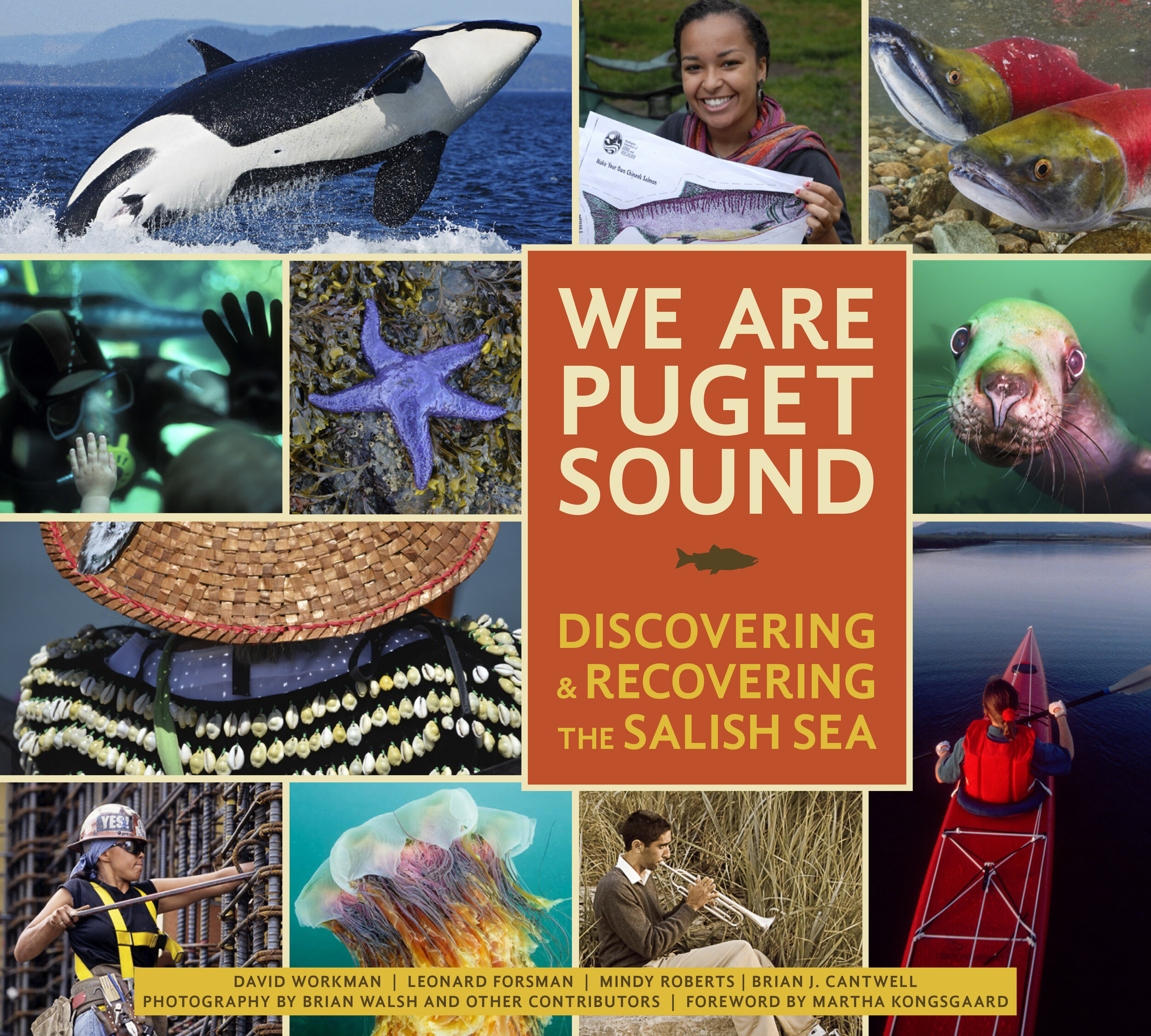

We are honored to make it on Pacific Northwest Booksellers Association’s bestseller list from local independent bookstores for the week ending Oct. 20.
"I was most captivated by the stories of the local people who have made a difference in protecting, restoring or otherwise improving our region."
-Christopher Dunagan via Kitsap Sun

“We Are Puget Sound is a stunning visual journey through a complex web of marine and terrestrial wildlife."
-Helen Cherullo, via Seattle Times
"Taking a fresh look at the inland sea we know and love, and the people who are helping to preserve it, this new book seeks to remind us all of our long ago and unfulfilled commitment to clean up Puget Sound."
-Brian J. Cantwell via brianjcantwell.com

We are honored to be on Seattle Public Library’s Peak Picks List this October. You can pick up your copy today- no hold and no wait necessary.
